

Related Articles
View AllOctober 12, 2026
Rudy Willingham: what agencies can learn from creators
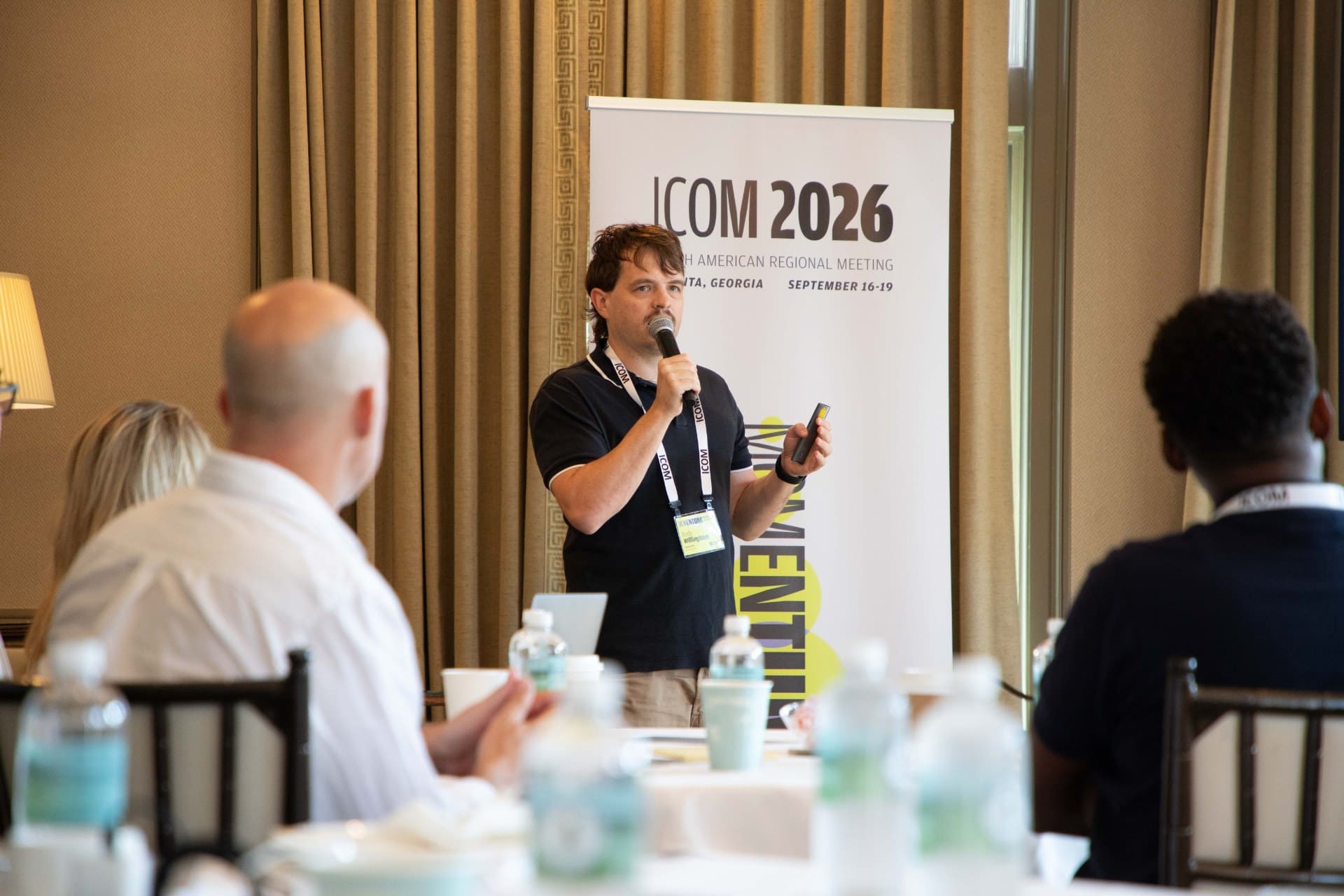
What a former agency copywriter turned creator taught us about social, speed and making cool stuff. Insights from the ICOM North America Meeting, Atlanta, September 2026.
At Cannes Lions this year, something had shifted. A few years ago it was advertising, then whispers about AI, then entertainment and celebrities. This year, creators were everywhere, and brands were bringing them in. If we don’t follow this closely, we’re missing out on something really important.
Then Fernando Machado, who has worked with ICOM, took on the role of chief brand officer at Chipotle. His first campaign? He asked 100 creators to make it. One of them was Rudy Willingham.
So we invited Rudy to Atlanta. And he’s no stranger to agencies: Alan Brown of DNA&STONE introduced him as one of his favourite people he’s ever worked with, from Rudy’s days as a copywriter at DNA.
From intern to “one-man ad agency”
Rudy started as an unpaid new business intern at Wong Doody in Seattle. (“Yes, I sort of lied my way into the job.”) From there he moved into new business, then brand strategy and digital media, and eventually became a copywriter.
At the time, he worried he was a jack of all trades. Looking back, that breadth is what makes his business work today: “I kind of view myself as a one-man ad agency.” He deals with clients, thinks strategically, writes and designs.
He was also candid about the hard part. After 10 years in advertising, he said, there was nothing he’d made that he was proud of. So he started an Instagram page for every cool idea he had, beginning with paper cutouts held up to Seattle landmarks: the Space Needle as a UFO, a Ferris wheel as a turntable.
One video changed everything
His tribute to Kobe Bryant, posted on the first anniversary of his death, took about five weeks to make. Within a week, five or six big brands were calling. “That one video changed my entire life and my business.”
The format was repeatable, so he applied it to anything big in pop culture, and brands followed: Nike, FIFA, the Seahawks, Coachella, HBO’s House of the Dragon. His “Posting Memes in Real Life” video has 351 million views on YouTube alone.
The lesson he took from it: people are drawn to handmade work. “You can feel the blood, sweat, and tears. You can see the imperfection.” And, as he put it, “one of the paradoxes of AI right now is that it’s making handmade art even more valuable.”
Ten lessons from the other side
Going viral is the best new business strategy. After the Kobe video, he stopped making cold calls. “Your video is doing the work for you.” His challenge to the room: “agencies should be their own influencers.” Build your own following, and people trust your ideas, you get more creative freedom, and you learn how to do it for brands.
Entertain first, sell second. He borrowed the “peanut butter method” from the Link in Bio newsletter: when you give your dog a pill, you wrap it in peanut butter first. The entertainment is the peanut butter, and the message is the pill. “If it’s not grabbing people in the first two seconds, you’re done.”
Show your work. He has seen brands post a commercial that gets no views, then post the behind-the-scenes, and that’s what goes viral. Agencies know how much work and craft goes into a commercial. Audiences rarely think about it, and that’s exactly why it connects.
Analog is back. He was scared of AI at first, but there’s a huge backlash online.
Any little way you can show that a human made what you’re showing, I think is really important.
Originality beats trends
Would you care if you hadn’t made it? On brand work it’s easy to get tunnel vision: is it hitting the brief, will the CEO like it? Step back and think like a stranger scrolling on their phone.
Find repeatable formats. The internet moves too fast to reinvent the wheel every time. The technique behind the Kobe video wasn’t one viral video, it was hundreds: he can repeat it for any big pop culture moment, without the brain power a brand-new idea takes.
Move at the speed of the feed. He posted his New York Knicks video on the morning of the parade, four or five days after the play it celebrated, and it blew up. A day later, it probably wouldn’t have. “Timing is everything.” On a lot of his work, clients ask for zero changes: “Is the idea good? Okay, post it.”
Swing for the fences. He’s read that roughly one in 10,000 videos goes viral. So ask: why would mine be the one that breaks through?
Be a student of the internet. Study a viral video the way you’d study a great ad: the hook, the song, the cut.
He also sees social as a free focus group. “If you make a post and it doesn’t perform, no one saw it. There’s no harm.” He often posts ideas at about 70% of where he wants them, and reads the comments to decide whether to keep going.
The question for agencies: one commercial, or 50 posts?
Rudy put the dilemma simply. A brand has a $1 million budget. Does it make one commercial, or 50 pieces of social content? More and more, it’s going to the 50 pieces, or one commercial for half the money plus 25 pieces.
Traditional agencies are built to make the commercial. To get a piece of the rest, he sees two routes: make it, with a fast in-house social content machine, or manage it, by finding great creators and empowering them. The best model, in his view, does both.
Managing is harder than it sounds. Many creators are very young, aren’t used to brand feedback, and “don’t use email.” That’s where agencies can add value: having account people who can connect with them, deliver feedback and keep things on time. Agencies can also connect the dots. Spot a creator whose style fits a brand, and keep a list of cool creators you can call at any time, which many senior marketers don’t have.
Looking 25 to 30 years ahead, he expects agencies to be full of Swiss Army knives: creatives who are strategic, strategists who are creative, and everyone shooting and editing. “If you’re going to be able to push out… 50 pieces of content for a campaign, you can’t just have a team of a couple people doing it.”
Two practical points from the Q&A:
Briefs are a starting point, not a box. Chipotle’s brief was simply to show the freshness of the brand. Rudy explained that his style was different, and they said, “Just do that.” The concept was approved in a couple of days, and the video was up the day after he submitted it.
If you’re going to hire 100 creators, you can’t nitpick every detail.
Paid media changes the maths. About 75% of his brand work now has paid media behind it. Some brands hire 50 creators, then put money behind the best-performing few. “It gives you 50 shots on goal.”
What to do on Monday
We asked Rudy how an agency should start. His advice: set a goal, whether that’s one video a week, every two weeks or once a month, and treat it like any other project. Ask your creatives to bring their five best ideas to the creative director, pick one, and carve out time in their schedules to make it. He’d even put creatives on the new business team, funded from the new business budget.
After the meeting, we followed up with a few more questions.
How long should you stick with it before deciding whether it’s working?
“I think you should keep going indefinitely until something works!”
Build your own channel, or back the creatives on your team?
“Build your own channel. And possibly do collaborative posts with creatives if they have their own social pages.”
And is viral the right tool for everyone? For example, a B2B client with a small budget and a few thousand buyers.
“Probably not in all honesty! I sometimes get approached by brands like this and tell them to just spend that money on great product videos/images and media.”
Pricing craft when nobody’s charging for time
Rudy’s work can take him three weeks. A lifestyle influencer might make a post in 30 minutes, and some campaigns price them the same. So he has to make the case: “This is more than just a social post. This is a piece of art.” It can run on TV, social or a billboard.
Today an agent negotiates for him. Brands have come to him with a budget, and after talking to his agent, “suddenly their budget is like 10 times more.” As he wrote to us afterwards, the agent’s job is to “convey the amount of time it takes to make great creative, and that it’s ultimately worth it. Sometimes the budget is the budget and you have to walk away.”
And what does he value in working with agencies? “They usually have great taste and want to make something cool and creative.” The downside: “sometimes the process is slower, because there’s another layer between me and the ultimate decision maker on the client side.”
Questions to take back to your team
- If we were our own influencer, what would we post first?
- Which ideas are sitting in our creatives’ drawers, and when will we make time to make one?
- Are we set up to make social content, manage creators, or both?
- Do we show the making of our work, or only the finished piece?
- How many layers sit between our best idea and getting it posted?
Still about the idea
For all the change, Rudy closed on something that hasn’t moved. “The game has changed a lot, but not really. It’s still about the idea. It’s still about making cool stuff.”